Wind Sailing
The term 'Wind Sailing' is not common.
People always speak about sailing charters and sailing rips but it doesn't seem to occur to most people that wind sailing is maybe the best part of the boat ride.
Wind Power is our specialty and we aim to show you how it is done correctly.
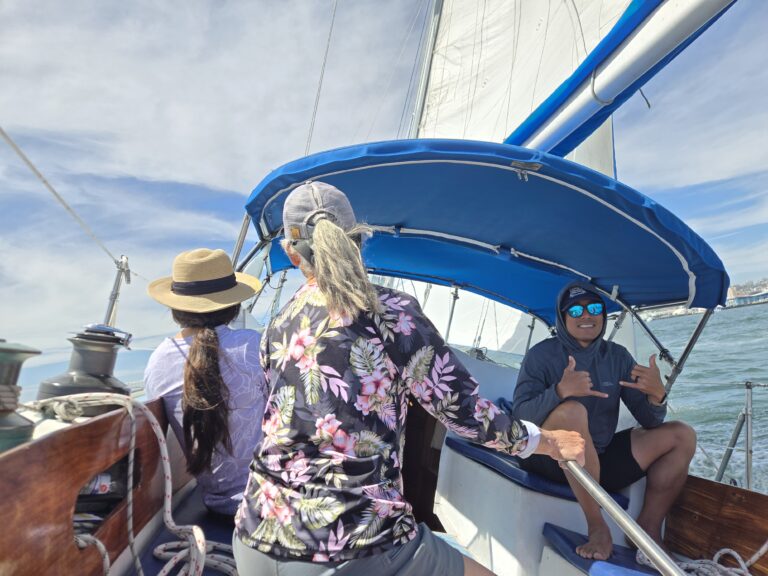
Wind power and Motoring
LIving in our great modern time with a schedule to keep and a willingness to be in the right place at the right time it would be foolish to declare ourselves purists that will not use our yacht motor.
Our experience on the water is what we are offering the knowing of when to run the motor when to shut it down and how to enjoy the environment and moment we are in.
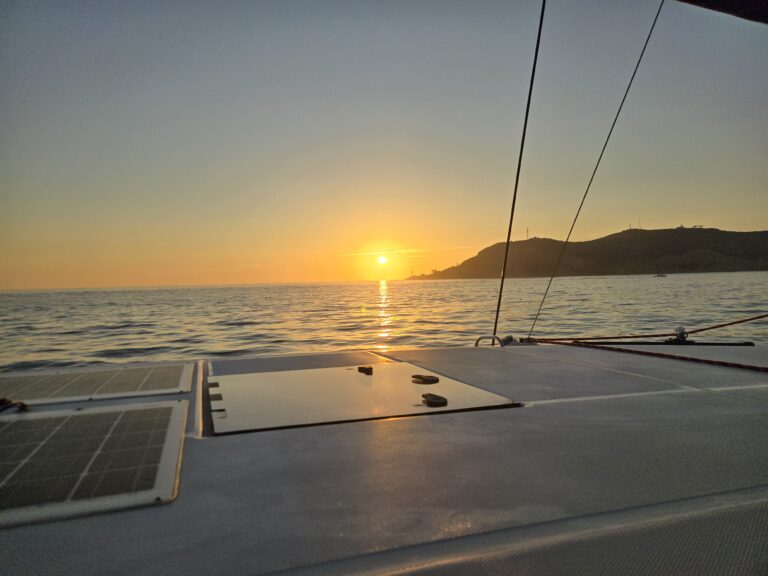
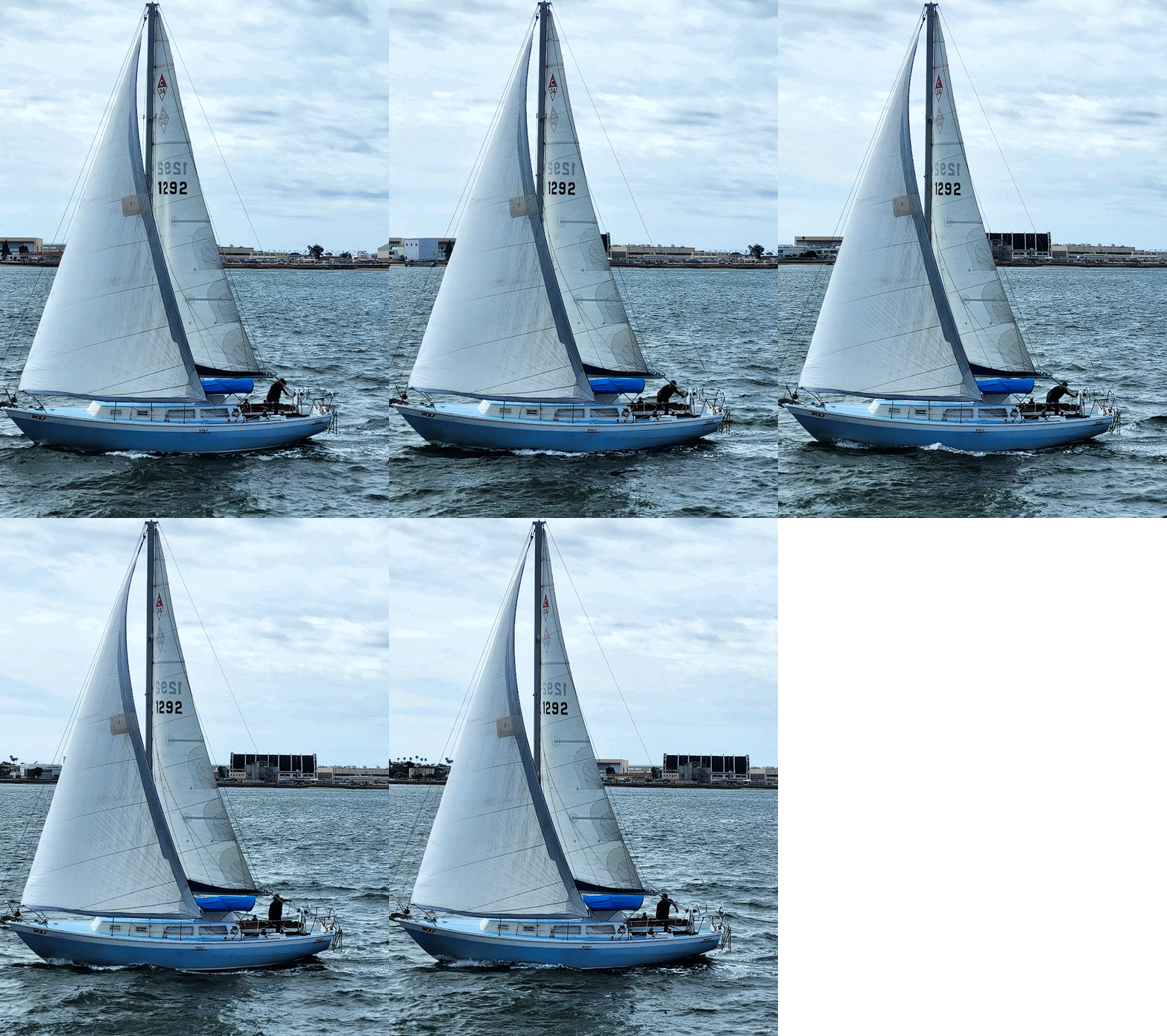
Wind Sailing the unpredictable Power
Wind sailing, or traditional sailing, uses the wind to propel a boat across the water. By adjusting the sails and the angle of the boat, sailors harness lift—similar to an airplane wing—to move forward, even at angles directly against the wind
Feeling the power of our planet.
The Physics of SailingSailing against the wind relies on the interplay between the sail and the boat's keel or centerboard. As wind flows over the sail, it creates low pressure (lift) that pulls the boat forward and to the side. The underwater keel resists this sideways movement, converting the wind's lateral force into forward motion.
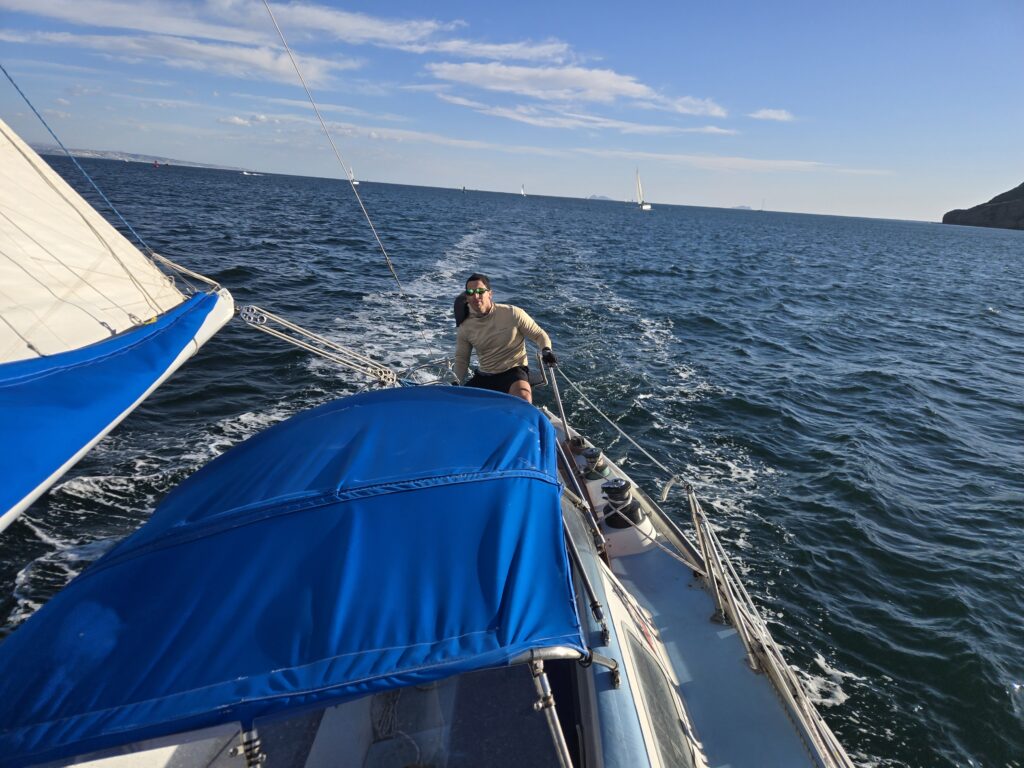
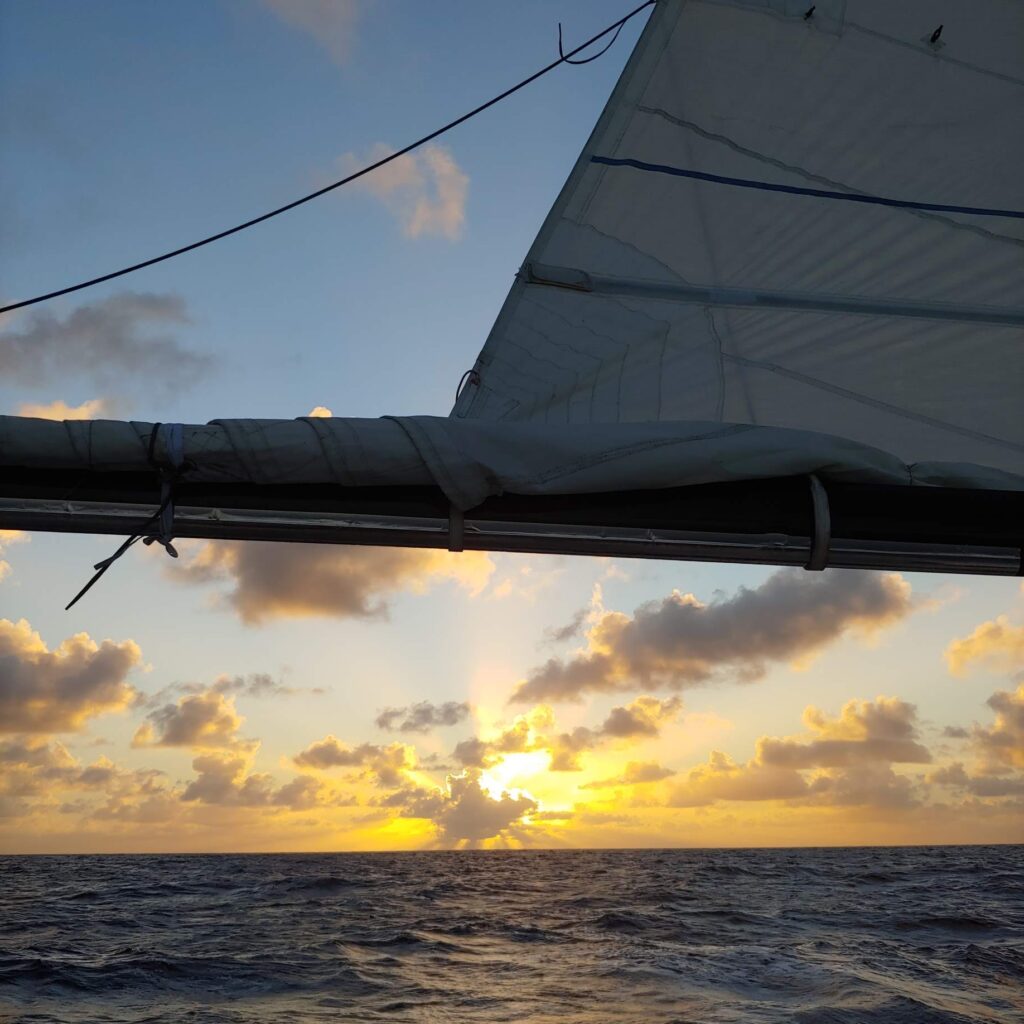
Wind Sailing Natural Power
Points of Sail A boat's heading relative to the wind dictates how its sails are set: Into the wind (Close-hauled): The boat cannot sail directly into the wind (a dead zone of about 45 degrees). To move upwind, boats must "tack," or zigzag at an angle to the wind.Across the wind (Reaching): This is the fastest and most efficient point of sail, where the wind hits the side of the boat. With the wind (Running): The wind is directly behind the boat, pushing the sails to maximize drag
A Diesel Engine designed for marina manovers and a slow push when the wind Has backed down.
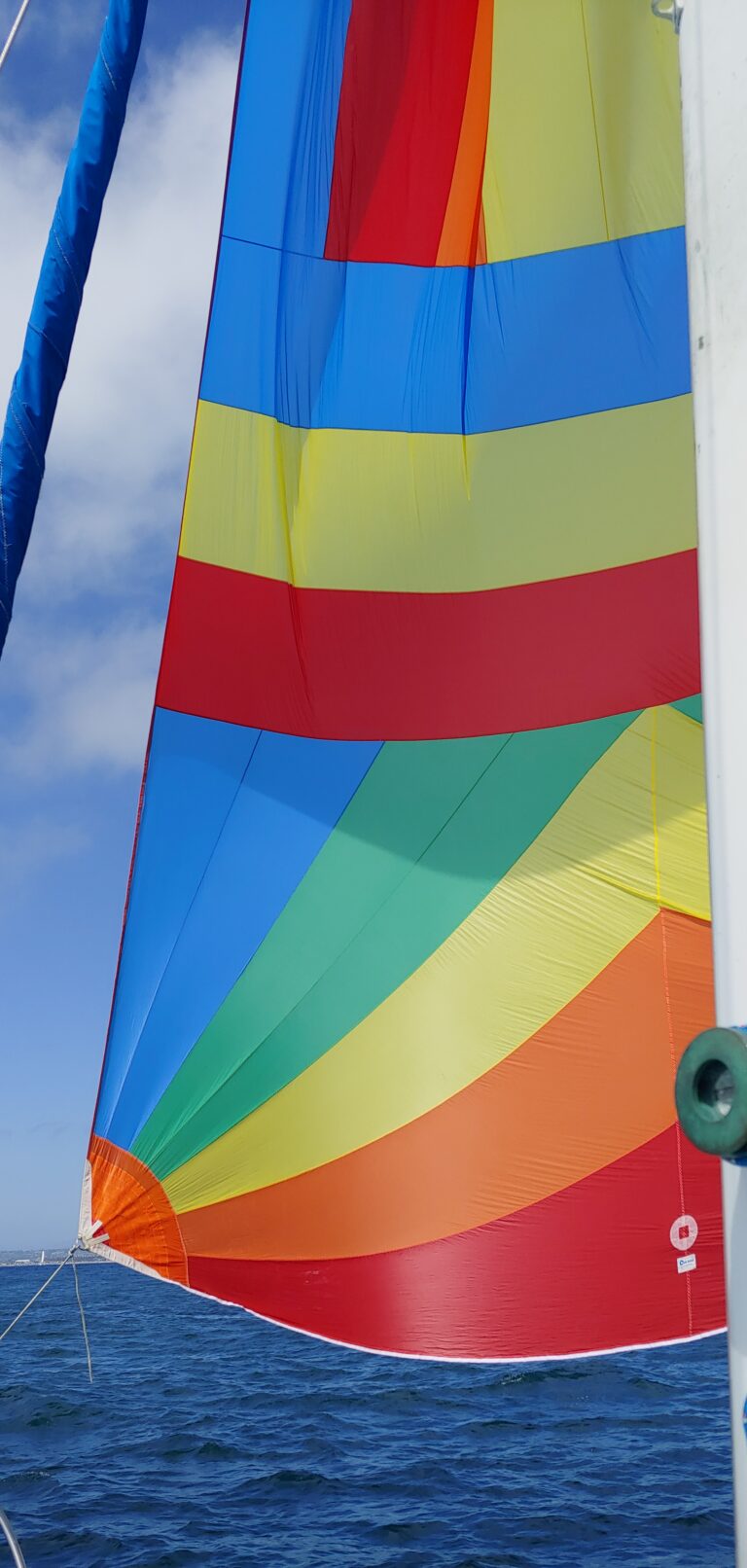
A spinnaker harnesses both lift and drag to propel the boat downwind. Drag acts as a direct push from behind, while the spinnaker's airfoil shape generates lift, pulling the boat forward and to the side. Working together, these forces create maximum downwind speed.
Enjoy wind sailing
There is something exhilarating about harnessing the power of the wind and feeling a sailboat come alive beneath you. As the breeze fills the sails, the boat begins to accelerate, slicing through the open water with a rhythm that feels almost like a gallop. The hull leans into a heel, the deck tilting beneath your feet as the sails load up as the boat powers forward. Every gust brings a surge of energy, and you can feel the wind, the water, and the boat working together as one. The sound of the bow cutting through the waves mixes with the rush of water along the hull, while the rigging hums under tension. There is a thrilling moment when the boat settles into its stride, heeled over and charging ahead, balanced perfectly between control and raw power. You lean with it, steering by instinct, feeling every wave and gust through the helm. Wind sailing at speed across open water creates a sense of freedom that is difficult to describe, the boat is not simply moving across the sea, it is being carried by the wind, powered by nature, and completely immersed in an exhilarating gallop.